
Night coverage has gaps
A guard holds one post. Perimeters, car parks and warehouse aisles go unwatched for hours, and attention drops sharply between 1am and 4am.
We are building Patroller, an autonomous patrol robot that covers banks, warehouses and gated estates through the night. It maps the site, patrols it on schedule, spots intruders with on-board AI and puts a human operator in control within seconds.
Repetitive night patrols over a large site are tiring, hard to verify and expensive to staff. In Enugu State, police reported arresting 130 robbery suspects and 450 suspects for burglary, stealing and related crimes in 2024 alone.[4]
A guard holds one post. Perimeters, car parks and warehouse aisles go unwatched for hours, and attention drops sharply between 1am and 4am.
Many incidents are discovered the next morning, with no footage, no timestamps and no record of which areas were actually patrolled.
By the time a site owner, supervisor or the police hear about an intrusion, it is usually over. Alerts depend on a phone call from whoever noticed.
Contract guards at banks, warehouses and estates typically earn ₦45k–₦100k a month,[2] but clients pay guard companies considerably more per guard once supervision, uniforms, insurance and margin are added, often around ₦150k. A 24/7 post needs two to three guards.
We don’t replace guards. We multiply their effectiveness.
Patroller takes over the repetitive, verifiable part of the job so a smaller human team can focus on responding. A robot also has costs of its own (hardware, charging, connectivity and maintenance), and our model accounts for them below.
A ground robot that patrols a site on its own all night, sees in the dark, tells a person from a shadow and escalates to a human the moment it matters.
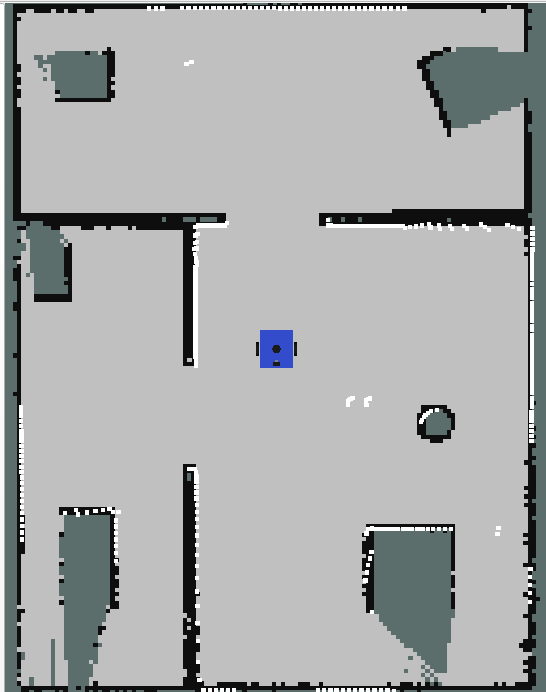
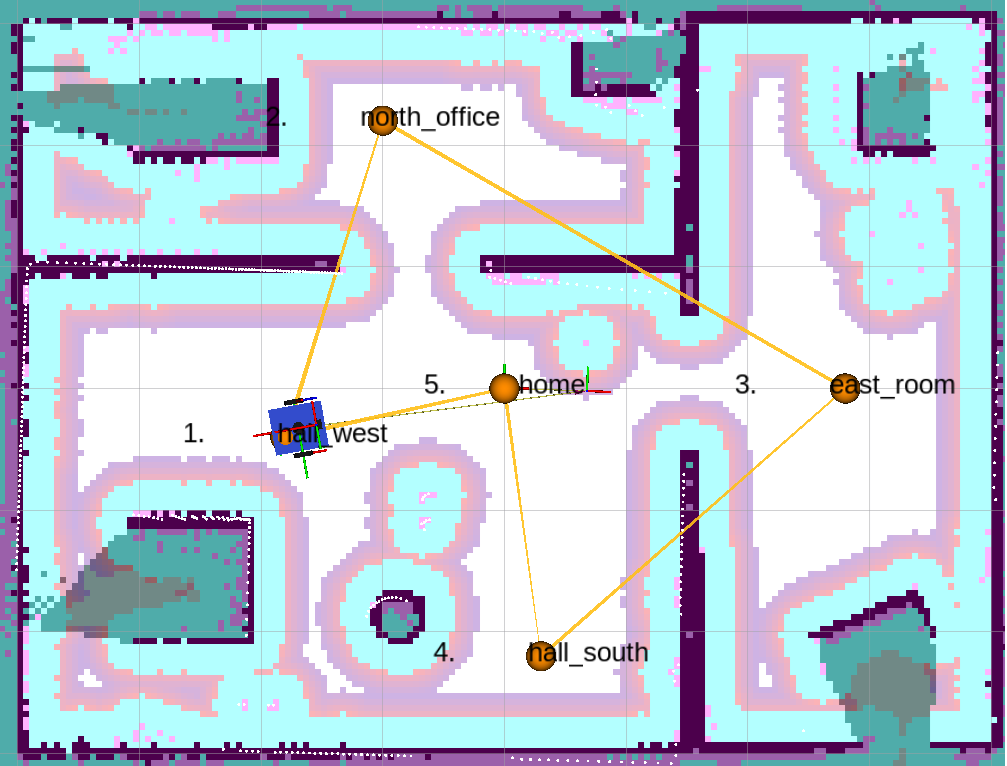
Follows predefined routes around a controlled site using a SLAM map and Nav2, night after night.
LiDAR + ultrasonic fusion keeps the robot clear of people, vehicles and new obstacles.
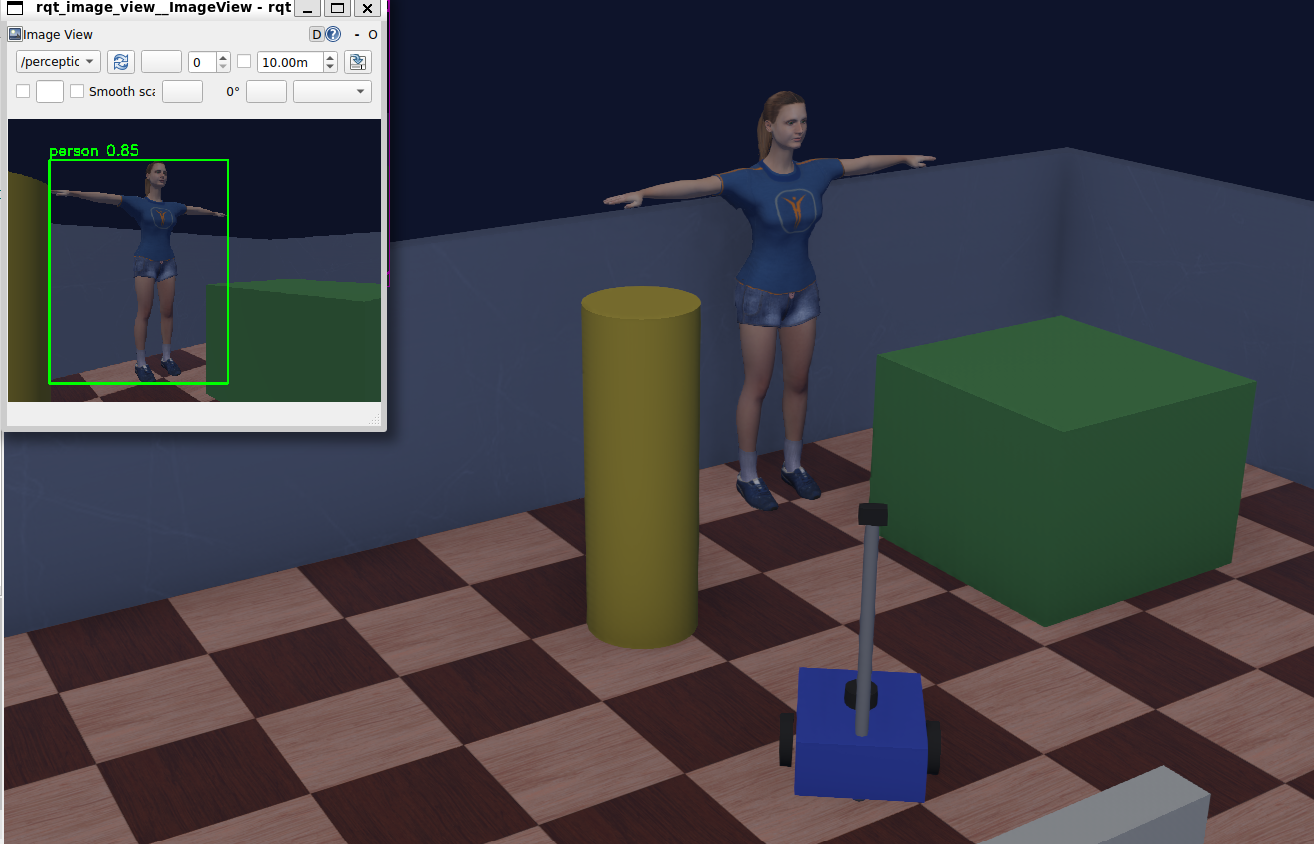
On-board YOLO detects people after hours and pushes an alert with a snapshot to the operator.
Low-latency stream from the mast camera, including IR night vision, over Wi-Fi with 4G fallback.
Live robot position on the site map, battery, health and an alert log for every patrol.
An authorised operator can take control, drive the robot and speak through it at any time.
Returns to its charging station on low battery and resumes the patrol schedule.
If the robot suddenly goes silent (power cut, jammed signal, damage), the backend alerts the operator with its last location and final video.
Thermal imaging, facial recognition, behaviour detection, a waterproof IP65-target enclosure, 12h+ battery and full anti-theft. See the production vision →
Proposed configuration. Final component selection depends on supplier quotes, power budget and MVP test results.
The same loop runs every few seconds on board the robot. Only alerts, telemetry and requested video leave the robot, which keeps bandwidth and data exposure low.
Follows scheduled routes on a SLAM map of the site, avoiding obstacles with LiDAR and ultrasonics.
YOLO runs on the robot to detect people (and later vehicles) in RGB and infrared video.
A decision engine applies site rules, e.g. a person detected in a restricted zone after hours.
Deters on the spot, alerts the operator with a snapshot and opens live video and control.
# runs on every detection frame
if person_detected and outside_authorised_hours(site):
    trigger_alert(snapshot, location, confidence)
    deter()            # spotlight + siren + voice warning
    track_target()     # keep the person in frame
open_live_stream(operator)Each stage retires a different risk. The concept shows the idea is coherent, the simulation that the software works, the MVP that the hardware works in the real world, and a pilot that customers will pay. Here is exactly where we are.
Use cases, system architecture, MVP specification and design concept defined.
DeliverableProduct concept & engineering requirements
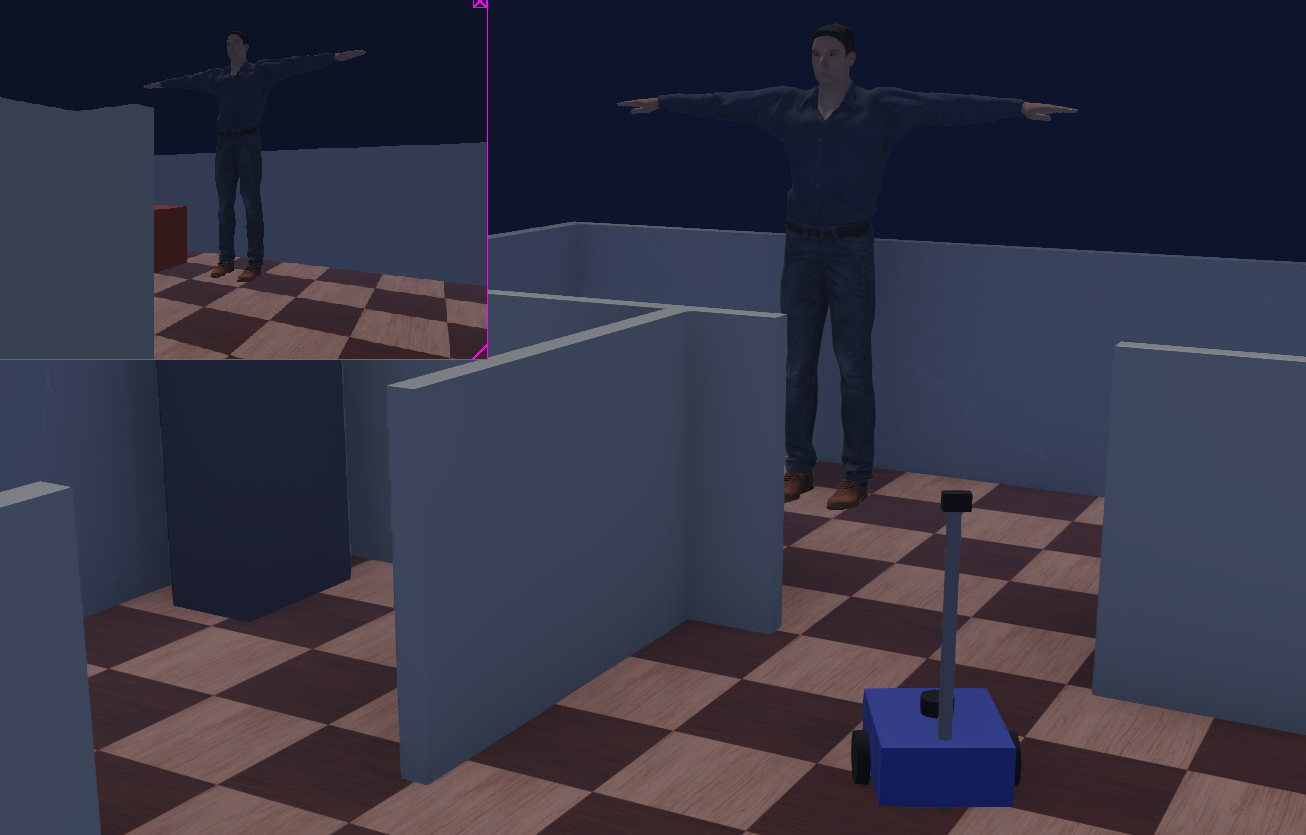
Full robot in Webots + ROS 2: SLAM, Nav2 patrol, YOLO person detection, security decision engine and a prototype alert dashboard all working.
DeliverableCore robot software proven in simulation
One working Patroller and charging dock, proven in 6 months at a controlled Enugu site.
DeliverableRepeatable night patrols with live alerts & video
Waterproof (IP65 target), fire-resistant enclosure, solar-assisted charging, 12h+ battery, thermal imaging, anti-theft.
DeliverableDeployable fleet for paying RaaS customers
What Patroller becomes after the MVP proves the core. Premium marks features reserved for the Premium and Enterprise tiers.
Smart-city integrations: patrol data and alerts feeding estate, campus and city security systems, so robots, cameras and responders work as one network.
Patroller is built on open, production-grade robotics tooling. Everything on the robot runs locally on a Jetson, so detection still works when the network doesn't.
Sees and understands the scene.
Knows where it is and where to go.
Moves the robot safely.
Keeps humans in the loop.
camera_nodeRGB + IR streamsdetection_nodeYOLO inferenceslam + nav2map, localise, plandecision_enginesite rulesmotor_control_nodedrive commandsalert_nodenotify backend| System | Technology | Status |
|---|---|---|
| Simulation | Webots | Built |
| Robotics middleware | ROS 2 Jazzy on Ubuntu | Built (sim) |
| Mapping & localisation | LiDAR SLAM + wheel odometry / IMU | Built (sim) |
| Navigation | Nav2 with multi-waypoint patrol loop | Built (sim) |
| Person detection | YOLOv8 / YOLO11 (Ultralytics) | Built (sim) |
| Vehicle detection | YOLO, additional classes | Next |
| Facial recognition | FaceNet / InsightFace: authorised vs unknown | Premium |
| Behaviour detection | Autoencoder anomaly models: loitering, running, fence-climbing | Production |
| Decision engine | Rule-based site policies: time rules, escalation → anomaly models later | Built (sim) |
| Prototype alert service | FastAPI service + simple dashboard, running locally | Built (sim) |
| Backend | Django + Django REST Framework | MVP |
| Operator dashboard | Flutter app: live map, video, alerts, teleop | MVP |
| Notifications | Push + SMS, phone-call escalation, offline alerts | MVP |
| On-board compute | NVIDIA Jetson Orin Nano | MVP |
| Physical platform | 4WD chassis, encoders, Li-ion + BMS, 4G/Wi-Fi | MVP |
Motors and sensors can be bought. What compounds is data: security footage and patrol patterns from Nigerian sites, used to train detection models that work in local lighting, layouts and conditions, plus the operational know-how to keep a fleet reliable.
Models to be trained on Nigerian sites, lighting and layouts. Hardware sized for local heat, rain, dust and power cuts.
Affordable sensors and compute, with AI models tuned to run on them, priced for Nigerian budgets.
Backend engineering is our home turf: real-time alerts by push, SMS and phone call, escalation chains and offline detection, developed in-house.
Focused on robots that patrol real sites every night, not on research demos.
Customers don’t buy a robot. They subscribe to patrolled, recorded, alert-ready coverage. Stratos owns, maintains and upgrades the hardware, so customers avoid a large upfront purchase and we earn recurring revenue.
+ ₦300,000 one-off setup
For: Gated estates and warehouses (schools and offices next)
About what a client pays for one night-shift guard, plus 24/7 recording, verified coverage and instant alerts.
+ ₦500,000 one-off setup
For: Banks and high-end facilities
About what a bank pays for two night-shift guards, plus thermal imaging, facial recognition and priority alerts.
+ ₦750,000 one-off setup
For: Multi-site banks, corporates and industrial sites
From ₦500k (₦400k–₦800k+ by site size). Stratos operators do the watching.
A cost optimisation, not a new expense. At roughly ₦150k per guard, a site with two to seven guards already spends an estimated ₦300k–₦1M a month on guarding. Standard works out at about ₦500 per patrol hour at 12 hours a night. A leading US security-robot maker quotes about $0.75 to $9 per hour.[5]
Pricing is a working assumption, to be validated with pilot customers.
Built one at a time from Western retail parts, a Standard Patroller would cost about ₦6.4M and a Premium about ₦7.2M (breakdown below). Buying direct from manufacturers brings Standard to about ₦4.5M and Premium to about ₦5.0M today. Buying for 20+ robots at once targets ₦3.5M and ₦4.0M.
| Part | Choice | USD | Landed ₦ | Std | Prem |
|---|---|---|---|---|---|
| Compute | Jetson Orin Nano 8GB + carrier board | $450 | ₦840k | ✓ | ✓ |
| LiDAR | RPLIDAR S2, IP65, 30 m range | $400 | ₦746k | ✓ | ✓ |
| Day/night camera | Outdoor PTZ with IR, IP66 | $200 | ₦373k | ✓ | ✓ |
| Thermal camera | FLIR Lepton 3.5 module | $400 | ₦746k | — | ✓ |
| Ultrasonics, IMU, GPS | Waterproof ultrasonics ×4, IMU, GPS | $100 | ₦187k | ✓ | ✓ |
| 4G LTE | Industrial LTE module + antennas | $80 | ₦149k | ✓ | ✓ |
| Drive | 24V hub-motor wheels + BLDC drivers | $420 | ₦784k | ✓ | ✓ |
| Battery | 24V 100Ah LiFePO4 + BMS (12h+) | $500 | ₦933k | ✓ | ✓ |
| Power electronics | DC-DC, wiring, fuses, e-stop | $120 | ₦224k | ✓ | ✓ |
| Solar | 100W panel + MPPT (dock on Standard, robot on Premium) | $150 | ₦280k | ✓ | ✓ |
| Dock & charger | Charging dock and contacts | $200 | ₦373k | ✓ | ✓ |
| Deterrence & anti-theft | Spotlight, siren, speaker, mic, tamper sensor, cooling | $120 | ₦224k | ✓ | ✓ |
| Frame & enclosure | Waterproof, fire-resistant, locally fabricated | local | ₦1.0M | ✓ | ✓ |
| Assembly & testing | Per robot | local | ₦300k | ✓ | ✓ |
| Standard total | ₦6.4M | ||||
| Premium / Enterprise total | ₦7.2M | ||||
USD prices converted at ~₦1,333/$ and landed in Nigeria at about +40% for freight, import duty (~20%, by HS code), surcharges, CISS, ETLS and 7.5% VAT. Several items are estimates pending supplier quotes. Sources: CNX Software: NVIDIA raises Jetson prices (Jul 2026) · RobotShop: RPLIDAR S2 · Core Electronics: FLIR Lepton 3.5 · TechEconomy: naira rate, 21 Oct 2026 · DHL: calculating import duties in Nigeria
Paid pilots at 1–3 sites, measured on incidents and visibility before and after Patroller.
Facility managers, bank security heads and estate executives in Enugu.
Guard companies already hold the client relationships. They can bundle or resell Patroller instead of competing with it.
Security spending is recurring and non-negotiable. It is one of Nigeria’s largest employers, and demand for electronic security equipment is growing fast. Robots sit between the two: labour-saving like CCTV, but mobile and responsive like a guard.
licensed private guard companies in Nigeria[1]
corporate guards employed by licensed firms, plus ~2M unlicensed[1]
typical monthly pay for contract guards at banks, warehouses and estates[2]
growth in Nigeria’s safety & security equipment imports, 2022 → 2024 (est.)[3]
What we still need to prove: how many banks, warehouses and estates in Enugu will pay a monthly fee for robotic patrol, and at what price. Collecting letters of interest from pilot partners is part of the MVP plan. If you manage a facility, tell us about your site visit our customer website, or download the customer deck (PDF).
The tier presets model a single batch of 20 robots bought at the start of year one, ₦10M overhead every year, and the bulk-target robot cost. The benchmark is Nigeria’s 364-day treasury bill, about 16% a year.[6] Every assumption can be changed. This is an illustrative model, not a forecast.
Fixed: robots last 5 years. Robots still working after year 5 count at their remaining book value.
| ₦ | Year 1 | Year 2 | Year 3 | Year 4 | Year 5 |
|---|
20 Standard robots bring in ₦43.2M a year in subscriptions. From that we pay connectivity, maintenance, the team and the robots themselves. The table shows each layer.
Our original plan (₦150k a month, ₦5M robots, no setup fee) returns less than treasury bills. Setup fees, tier pricing and bulk buying are what clear the bar. Try the “Original ₦150k plan” tab.
The ₦9M raise funds the MVP only. Fleets are funded later by investors, equipment financing and customer prepayments. Pilots will replace these assumptions with real numbers.
We are raising ₦9,000,000 to build and prove one Patroller and its charging dock in 6 months. The full amount is needed upfront so components can be ordered together and the build runs without stop-start delays.
Single pre-seed raise, committed in full before the build starts.
From component order to live demo at a controlled Enugu site.
Equity, a convertible instrument or a strategic partnership, structured with legal advice.
| Category | Estimate | Share |
|---|---|---|
| Compute & sensorsJetson Orin Nano, 2D LiDAR, 1080p RGB + IR night camera, ultrasonic array, IMU, GPS | ₦2,100,000 | 23% |
| Drive train & chassis4WD chassis, geared DC motors with encoders, motor drivers, weatherised enclosure, camera mast | ₦1,400,000 | 16% |
| Docking & charging stationAuto-dock contacts, charger, alignment markers, station enclosure | ₦500,000 | 6% |
| Power & connectivityLi-ion pack + BMS, regulators, 4G LTE module, Wi-Fi, speaker & siren | ₦500,000 | 6% |
| Contract engineeringMechanical & electrical specialists for fabrication, wiring and safety review | ₦800,000 | 9% |
| Cloud, dashboard & alerts6 months hosting, SMS gateway, push notifications, storage for footage | ₦450,000 | 5% |
| Field testing & pilot setupControlled-site trials in Enugu, transport, site mapping, demo days | ₦500,000 | 6% |
| Import, shipping & customsFreight and duties on components not available locally | ₦325,000 | 4% |
| Legal, IP & complianceInvestor agreements, NDPA data-protection review, trademark | ₦350,000 | 4% |
| Line-item subtotal | ₦6,925,000 | 77% |
| Contingency (~30%)Estimates are pre-quotation. We expect real supplier quotes to run up to ~30% above them, so this buffer is built in. | ₦2,075,000 | 23% |
| Total | ₦9,000,000 | 100% |
Software (ROS 2 stack, AI models, backend and dashboard) is developed by the founder and is not billed to this budget.
With a proven robot we sign paid pilots with Enugu banks, warehouses and estates, then raise a seed round and equipment financing to build the first fleet of ~20 robots. Early backers are first in line for that round.

Founder · Stratos AI & Robotics
Computer Science at Enugu State University of Science and Technology (ESUT), with a background in machine learning. I build ML systems from first principles and have taken Patroller from a blank page through every simulation phase: it maps, patrols, detects intruders, decides when to escalate and raises alerts on a prototype dashboard.
I am building Stratos to bridge the gap in Nigeria’s security sector, between what facilities need (constant, verifiable coverage) and what manual guarding can realistically deliver at night. My approach is software-first: prove the intelligence in simulation, then spend money on hardware only once the software works.
I’m looking for engineers who want to put real robots on Nigerian streets:
Whether you want to back the MVP, help build it or host a pilot, tell us a little about yourself and we’ll reply within two working days.
Prefer email? nwankwofrank191@gmail.com · Phone / WhatsApp: 0810 723 6175